
I build products from zero. Fifteen years of it, mostly as a co-founder and mostly through a design lens. I think about systems, platforms, and flywheels more than drop-shadows. Every role has come to me through referral. Lately I’ve been shipping AI-native products with small teams. Now I want to bring my range to larger products.
Currently building GoodLocal, a rewards platform for local commerce. Previously, AI creative systems with StyleOf, and a 3-sided marketplace mission at Retailsphere. One successful exit and plenty of learning experiences. Living the life with my wife in Boston. Remote working before it was cool (~15 years).
Staff / Principal IC
0
1
Scale
AI-native
Platform & Systems
Remote
I build products from zero. Fifteen years of it, mostly as a co-founder and mostly through a design lens. I think about systems, platforms, and flywheels more than drop-shadows. Every role has come to me through referral. Lately I’ve been shipping AI-native products with small teams. Now I want to bring my range to larger products.
Currently building GoodLocal, a rewards platform for local commerce. Previously, AI creative systems with StyleOf, and a 3-sided marketplace mission at Retailsphere. One successful exit and plenty of learning experiences. Living the life with my wife in Boston. Remote working before it was cool (~15 years).
Staff / Principal IC
0
1
Scale
AI-native
Platform & Systems
Remote
Capability Stack
Capability Stack
Selected Work
Selected Work
StyleOf: Studio
2023 - 2025
Co-Founder, Product & Design
A creator platform for owning your style in the age of generative AI.
A creator platform for owning your style in the age of generative AI.


Own your style. Earn from it.
AI-powered monetization and distribution for artists
Tools for artists to train and test
Artists use StyleOf Studio to train AI on their style.
They own and fine tune it.
Fan-facing campaign pages
The distribution loop. Each style became a shareable campaign page where fans could generate personalized artwork.
Creator profile displaying style campaigns they own

Campaigns show examples of the style


Style discovery app for consumers
An app helps consumers discover styles on StyleOf (unshipped)
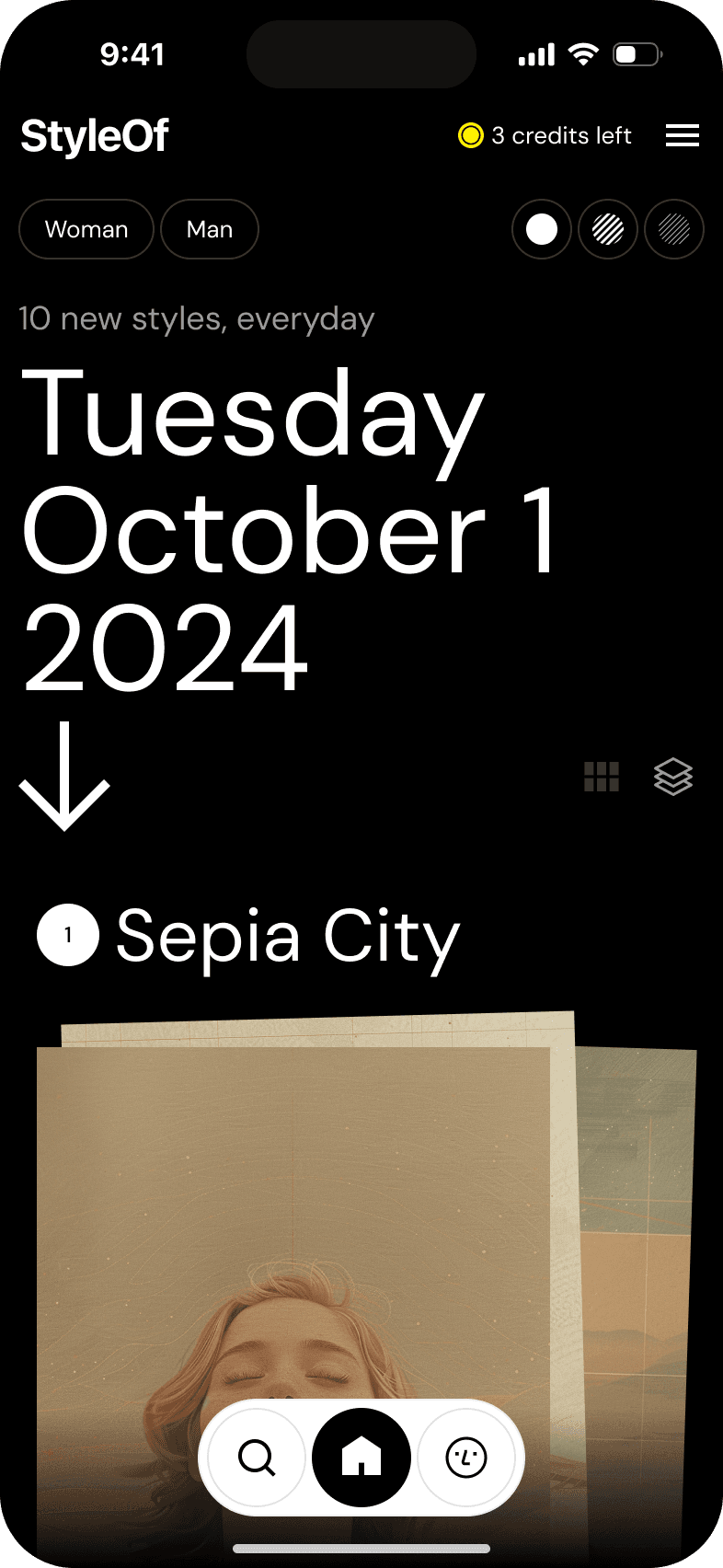

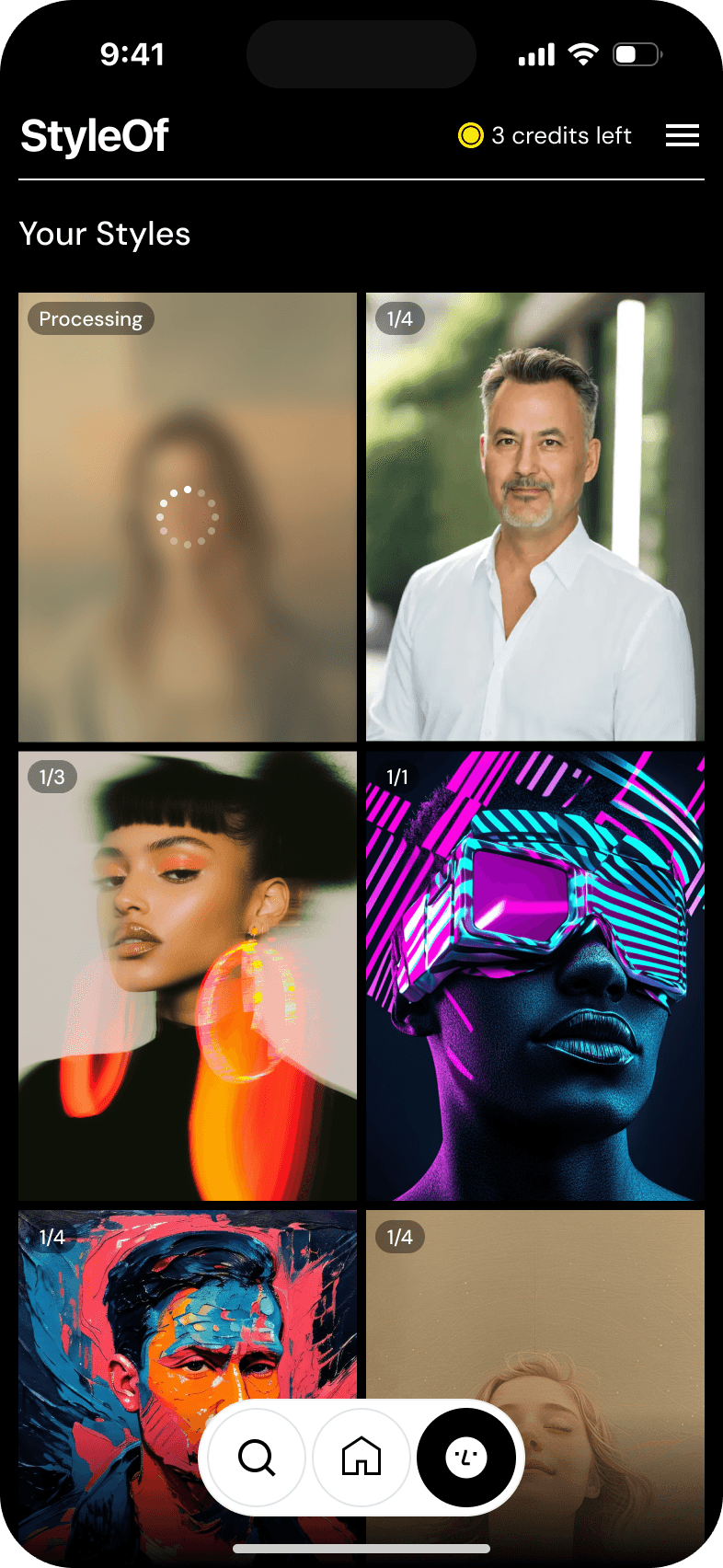
A past Parallel client reached out while exploring a new AI platform for creatives. I had been experimenting with generative AI and wanted to make it a deeper part of my work, so the timing was right. StyleOf started with a small team: the CEO, a couple engineers, and me. The core idea was simple but difficult. As AI image generation flooded the internet with work trained on artists’ styles, could we give creators a way to participate, control the experience, and earn from it?
StyleOf Studio became the core product. Artists could train their own model, test the results, approve how their style could be used, and launch shareable campaigns where fans could generate personalized artwork in that artist’s style. We never raised the round, but the work became one of the most important AI learning experiences of my career. It forced me to design around model behavior, artist trust, fan creativity, and a technology layer that was changing almost weekly.
65M images created
55K fans received personalized artwork
Built and launched the core creator workflow for training, testing, approving, and sharing AI styles
Explored multiple AI product wedges while searching for product market fit
Read about the challenges and learnings
Own your style. Earn from it.
AI-powered monetization and distribution for artists
Tools for artists to train and test
Artists use StyleOf Studio to train AI on their style. They own and fine tune it.
Fan-facing campaign pages
The distribution loop. Each style became a shareable campaign page where fans could generate personalized artwork.
Creator profile displaying style campaigns they own
Campaigns show examples of the style
Style discovery app for consumers
An app helps consumers discover styles on StyleOf (unshipped)
Home
Browse
Styles you've used
The hard parts
Generative AI was moving faster than the product could comfortably stabilize. New models, new interaction patterns, and new expectations were appearing constantly.
Model training also had a learning curve. For some artists, it worked quickly. For others, it became a craft of its own: choosing the right inputs, testing outputs, understanding what the model captured, and deciding what level of control mattered.
The hardest product question was not just “can this generate good images?” It was “what does control feel like to an artist when the material is their own style?”
Learnings
StyleOf gave me a practical foundation in how AI models are trained, tested, shaped, and experienced by real users. It also taught me how much complexity has to stay behind the scenes for AI products to feel approachable.
My belief is authenticity becomes more important as AI adoption grows. With more and more being generated, trust, taste, authorship and human context become the differentiators.
Retailsphere
2019 - 2024
VP of Product
The Bloomberg of retail real estate. Building the leasing flywheel.
The Bloomberg of retail real estate. Building the leasing flywheel.
I joined Retailsphere through a referral. The founder had built a valuable retailer database and a scrappy front-end for exploring it. My role was to turn that raw advantage into a product platform. Coming out of COVID, commercial real estate teams needed faster ways to find, understand, and reach the right tenants. The industry still ran on relationships, manual research, stale data, and fragmented workflows. We wanted to make the right handshake happen faster.
Over five years, I helped build Retailsphere into a three-sided platform between retailers, property owners, and brokers. The work spanned DaaS, CRM, tenant discovery, market research, lead signals, automations, dashboards, permissions, email cadences, and data operations. The role stretched well beyond traditional product design. I shaped the roadmap, stayed hands-on in Figma, partnered closely with engineering, supported sales and investor conversations, and helped connect product decisions to the company’s financial model. The visible UI was only the surface; much of the real design work lived in the systems underneath it.
Grew from $0 to $1.2M ARR
Reduced quarterly churn to ~2%
Increased data operations efficiency by 1,100%
Improved new-logo sales from roughly 1 per month to 5+ per month
Helped redesign workflows that supported a 20-person data team
Built platform systems across DaaS, CRM, marketplace, and marketing automation
Read about the challenges and learnings
Data Platform + CRM + Marketing Automation
Data Collection Systems
team efficiency increased by over 1,100% daily
Rethinking Search: filters, facets, fuzzy autocomplete, algorithm driven results.
Customer acquisition increased from 1 to 5+ per month. Triggered phase to scale the sales team
Before

After (Phase 1)
Millions of company profiles with comprehensive information, integrated with a CRM
Sessions with frustrations decreased by 70% (FullStory)
A feature rich CRM seamlessly connected to our data platform
Reduced churn by creating a sticky product with adoption of 50%+ customers
An automated reach-out system delivering real-time lead signals
Turned a data platform into a daily use tool and gained 85%+ customer adoption

Systems Design
From day one, I designed foundational systems to support long-term growth and complexity.
Positive Platform Effects
By designing for contribution loops, we created compounding value across the platform. User actions benefit the entire ecosystem.
Read about these on the desktop version of this portfolio.


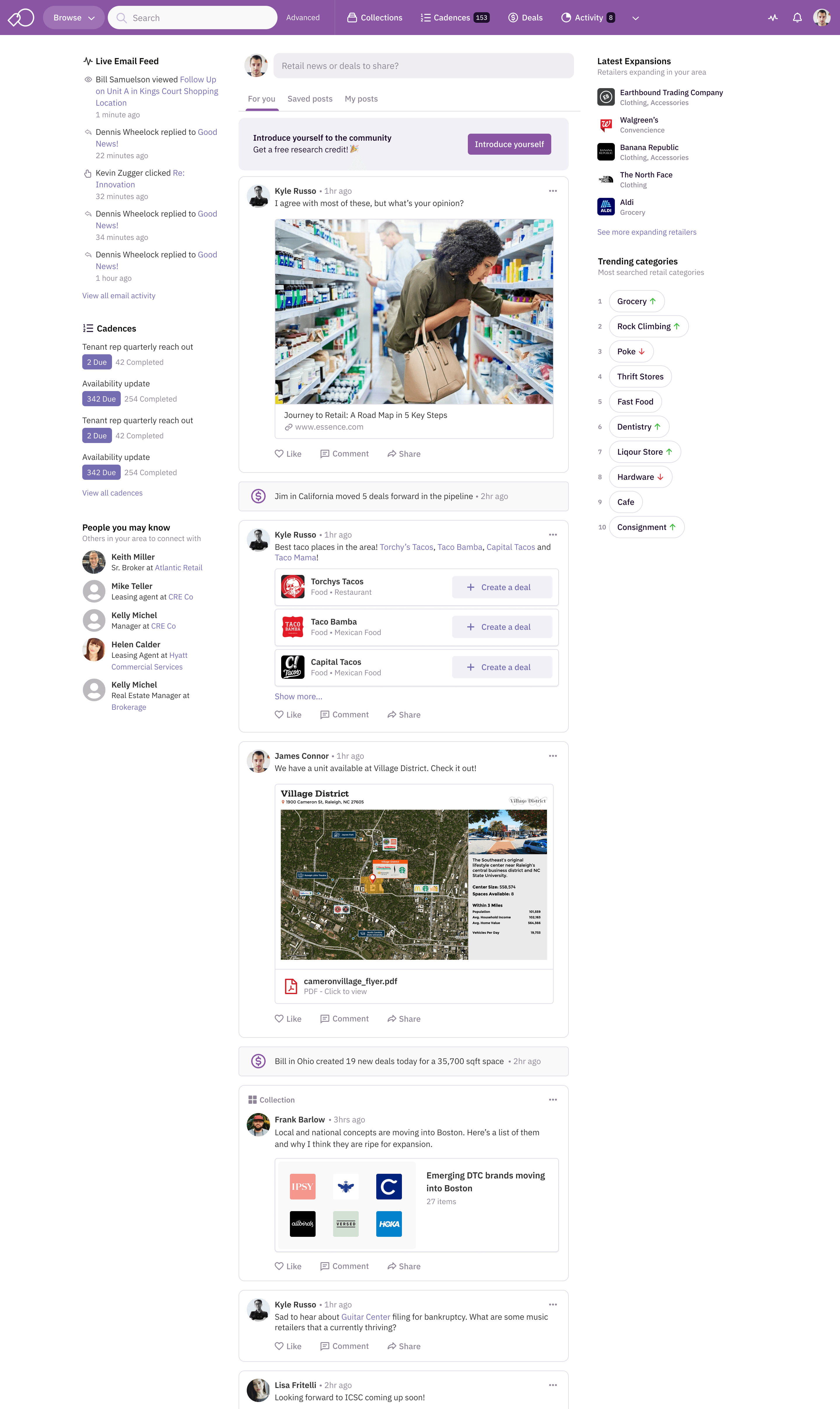

Data Collection Systems
Team efficiency increased by over 1,100% daily


Rethinking Search: filters, facets, fuzzy autocomplete, algorithm driven results.
Customer acquisition increased from 1 to 5+ per month. Triggered phase to scale the sales team.
Before
After (Phase 1)
Millions of company profiles with comprehensive information, integrated with a CRM
Sessions with frustrations decreased by 70% (FullStory)
A feature rich CRM seamlessly connected to our data platform
Reduced churn by creating a sticky product with adoption of 50%+ customers
An automated reach-out system delivering real-time lead signals
Turned a data platform into a daily use tool and gained 85%+ customer adoption
Systems Design
From day one, I designed foundational systems to support long-term growth and complexity.
Flexible Entity Modeling
Retail is relational at its core. I designed a system that could capture the complex relationships between shopping centers, retail units, brokers, companies, and contacts.It unlocked use cases across research, CRM, and analytics.Automated Data Ingestion
I helped design scraping and crawling systems that prioritized high-value retailers, auto-populated the database with new units, and flagged closures. It turned raw web data into structured, actionable insights.Signal-Driven Onboarding
Our onboarding process doubled as a data refinement loop. I built workflows that let new customers verify and update data on their own properties, improving first-day value while enhancing our dataset.Email Integration Infrastructure
To support outbound cadences, I worked with our engineers to ensure bulletproof email delivery across providers. There were plenty of navigating edge cases, throttling issues, and compliance challenges to get right.Enterprise-Ready Access
I introduced service accounts and bulk authentication tools to streamline onboarding for large teams, helping us land and expand in enterprise environments.Change Management
People leave jobs and our backend systems needed to be ready for when it happens. We needed to implement automated and manual systems to help transfer data and permissions to other users.Positive Platform Effects
By designing for contribution loops, we created compounding value across the platform. User actions benefit the entire ecosystem.
Contact Syncing
When users enable syncing with our database, they automatically receive fresher contact data; kept up-to-date by both our research team and other users’ updates.Shared Collections
Users can curate and share lists of retailers, properties, or leads. Users shared these with teammates and clients; driving engagement and pulling new users into the platform.CRM Win Signals
When users mark a deal as “won” in the CRM, those relationships automatically enrich the entity profile, making future prospecting easier for others.On Demand Research Loops
Customer research requests feed into our research queue, adding high-value data that benefits the broader user base.News Feed Engagement
A community layer where users post updates, deals, and trends. It created opportunities for discovery and network effects through likes, comments, and shares.Tenant Updates
When a user flags tenant movement in properties they manage, the changes update entity profiles for everyone, which helped keep the platform real-time and reliable.


The hard parts
Retailsphere was not one product with one user journey. It was a connected system of tools serving different sides of the retail leasing market.
Retailers, property owners, brokers, sales teams, data teams, and internal operators all needed different things from the same underlying data. A change in one place could affect lead quality, sales workflows, data collection, customer trust, or the economics of the business.
The hardest work was deciding what to build next. Finding product market fit didn’t come as easy as my previous startups. It was more of a sequence of bets: improving data quality, making discovery easier, creating sharper signals, supporting CRM workflows, and finding the mechanics that could compound into a marketplace.
Learnings
Retailsphere is where platform thinking became my day-to-day work.
It refined how I think about systems, not just screens: how data is collected, how workflows compound, how internal operations affect customer experience, how privacy and permissions improve trust, and how product decisions become visible in revenue, churn, and margin.
It also changed how I lead. I learned to move between functions quickly: from polishing UI details, to planning sprints, to shaping the roadmap, to supporting sales, to understanding what would get the company closer to profitability.
StyleOf: Muse Pro
2024
Co-Founder, Product & Design
Real-time AI guided by your hand.
Real-time AI guided by your hand.


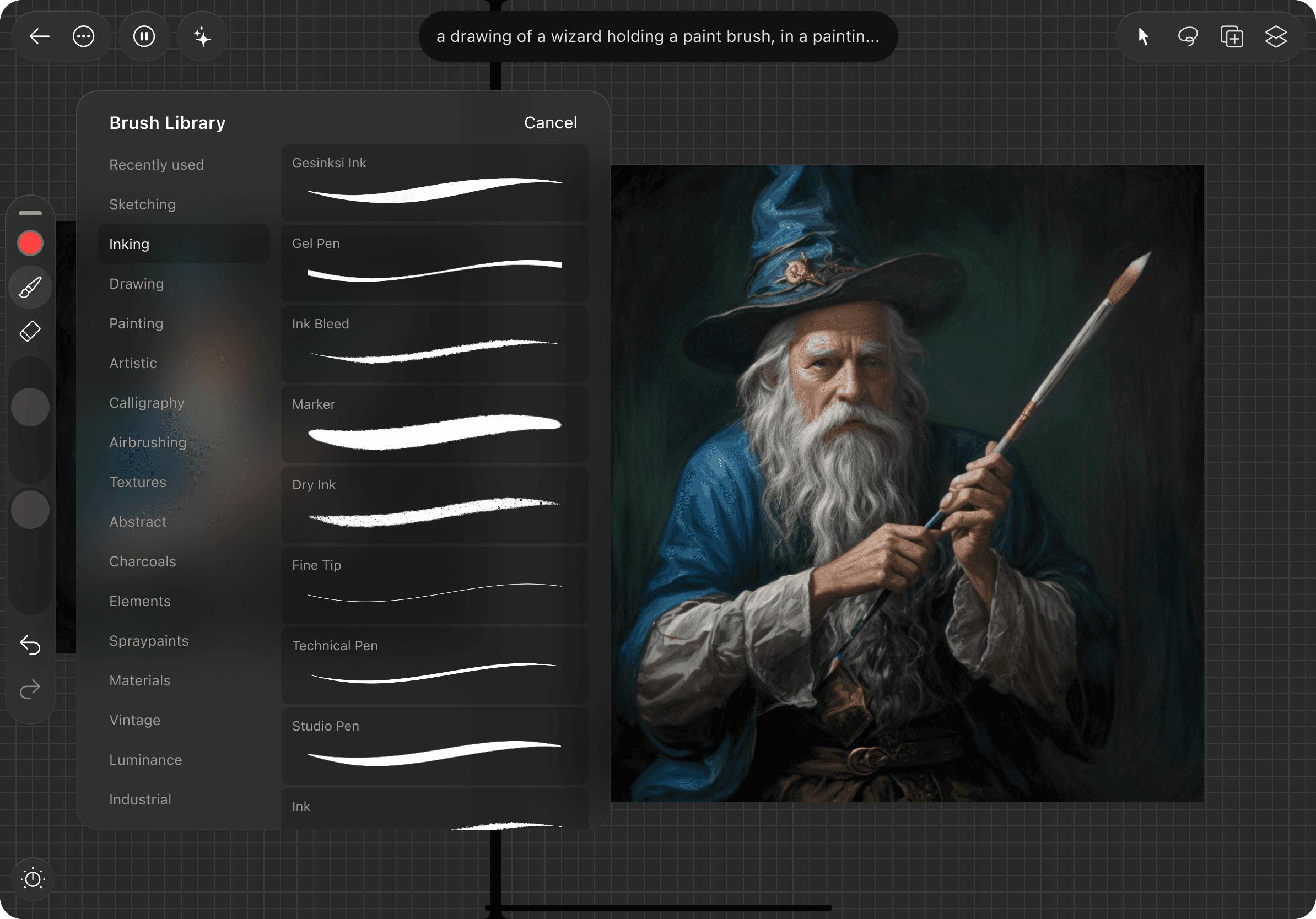
Muse Pro was an iPad and iPhone drawing app where AI worked alongside the artist in real time. One engineer and I built it in about two months as a focused StyleOf product bet.
At the time, many generative AI products were trying to remove the human from the process. We made the opposite bet: artists wanted more control, not less. The AI needed to understand the direction of the work, respond to the hand, and help shape the image without taking it over.
The product also created a bridge back to StyleOf Studio. Artists using Muse Pro could eventually draw with their own trained models, turning StyleOf from a model-training platform into a more complete creative workflow. Muse Pro was well received, but the unit economics of real-time generative AI in 2024 made it difficult to price for the prosumer market.
#3 Product of the Day on Product Hunt
120k drawings created in the first 30 days
Built and launched in about two months with one engineer
Tested a real-time human-in-the-loop AI interaction model before the pattern became more common
Read about the challenges and learnings
The hard parts
Real-time AI had a very different product feel than prompt-based generation. The question was not just whether the output looked good, but whether the AI felt like it was helping at the right moment.
I spent a lot of time drawing with the product to feel that balance firsthand: where the AI extended an idea, where it corrected too aggressively, and where it drifted away from the artist’s intent.
We also learned that many early users wanted to feel creative more than they wanted a professional creative tool. That created tension between the audience the product attracted and the pricing needed to support real-time generation costs.
Soon after launch, a well-funded AI company released a similar product, which reinforced one of the biggest risks of building at the edge of new technology: being early can create momentum, but it does not guarantee defensibility.
Learnings
Muse Pro improved my understanding of control in AI products.
It taught me that creative AI is not only about output quality. It is about timing, effort, confidence, and how much control the person feels they still have over the result.
It also proved how fast a small team can move when the designer and engineer share the same product vision. We were able to ship something coherent in weeks because the concept, interaction model, and execution stayed tight.
StyleOf: GifStar
2024
Co-Founder, Product & Design
Like Giphy, but every GIF has your face. A distribution play underneath.
Like Giphy, but every GIF has your face. A distribution play underneath.
The foundation to work from
Our AI engineer built amazing face swapping tech. Just look how one photo of me is transformed!


Navigation
Highly optimized with a focus on discovery and quick access to your gifs
Optimized Onboarding
Guided onboarding was a big friction. The new approach brought an immediate revenue boost.
Old — We had users sign-up and upload a photo to get started. A lot to ask.
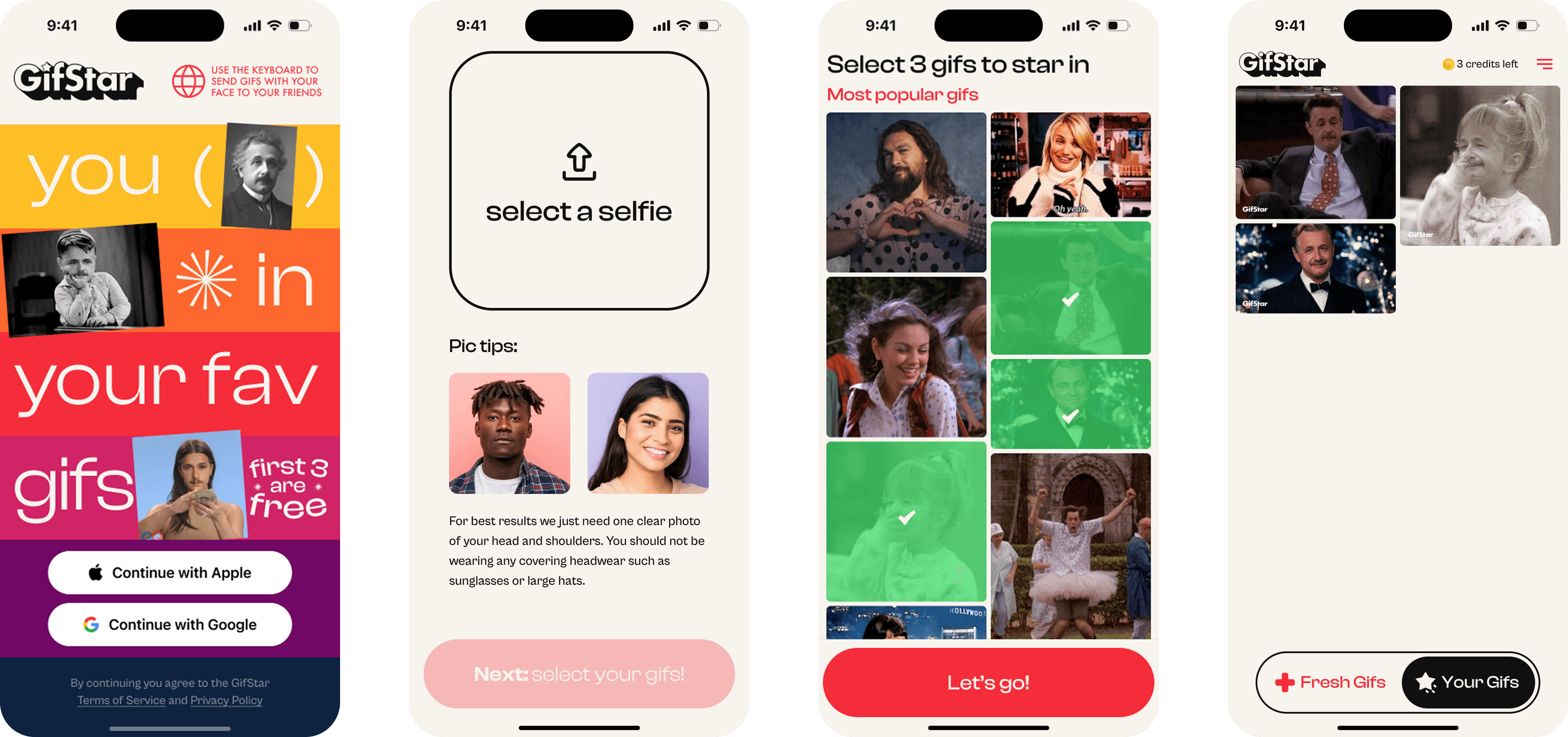
New — No forced sign-up. Explore, try it, sign up to save.

Quick face selection
Faces of all your friends at the ready for the perfect moment in your chats


Network Effect
Unsubscribed users gain more credits by sharing gifs they create

GifStar started as a way to show off StyleOf’s face-swapping technology and quickly became its own product bet. The mechanic was simple: upload one selfie, then put yourself into any GIF. Most face-swapping products needed too many inputs to get a good result. We pushed the experience down to one photo, added curation to keep the content safer, and optimized hard for speed because the whole product only works when the friction is near zero.
The app was fun in chats with friends, but the early signals suggested something larger: 6% free-to-subscriber conversion, ~40 new users daily without meaningful marketing, and a 4.6-star App Store rating. Underneath the novelty was a potential distribution play for entertainment, sports, creators, and brands. At scale, every brand drop, movie release, sports moment, or cultural event could become a personalized content campaign. A movie GIF lets you become the main character and share it to connect with others.
6% free-to-subscriber conversion
~40 new users daily with no meaningful marketing
6-star App Store rating
Reduced face-swap onboarding to one selfie
Built one React Native experience for iOS, iPad, Android, and web
Read about the challenges and learnings
The foundation to work from
Our AI engineer built amazing face swapping tech. Just look how one photo of me is transformed!
Navigation
Highly optimized with a focus on discovery and quick access to your gifs
Optimized Onboarding
A guided onboarding was one of the biggest frictions. The new approach brought an immediate revenue boost.
Old — We had users sign-up and upload a photo to get started. A lot to ask.
New — No forced sign-up. Explore, try it, sign up to save.
Quick face selection
Faces of all your friends at the ready for the perfect moment in your chats
Network Effect
Unsubscribed users gain more credits by sharing gifs they create
The hard parts
GifStar had to feel instant. Every extra step weakened the loop, so the work became a constant search for friction: upload speed, GIF selection, generation time, sharing, retries, and moments where users might drop off.
The other challenge was positioning. On the surface, GifStar looked like a fun consumer app. Underneath, it was a content distribution strategy for entertainment, sports, creators, and brands. That made the fundraising and partnership story harder to tell, because the product’s simplicity could hide the size of the opportunity.
We also had to design around safety. Face-swapping is powerful technology, so curation mattered. We didn't want to make an open-ended tool for any content; it's a controlled, shareable, high-trust experience.
Learnings
GifStar reminded me that small product bets can reveal much bigger strategies.
A lightweight app can become a wedge into distribution, partnerships, and new business models if the core behavior is strong enough. In this case, the behavior was simple: people like seeing themselves inside culture, and they like sharing it when it feels fast, safe, and funny.
It also sharpened my instinct for product friction. When the loop is this small, every second and every tap matters.
Other products I helped build
Other products I helped build

Nuvi
2011 - 2016
Co-founder
Acquired three times since. $0 to $1M monthly revenue. Started as a lunch-break prototype. Became a real-time social monitoring platform that grew from five people to a few hundred in a year. I patented an approach to visualizing real-time data, designed a suite of products, improved systems while we scaled up, and built reporting features that drove $2–3M ARR on their own. Customers included Amazon, the NFL, and Costco.

Rentler
2011 - 2013
Co-founder
Acquired by TenantCloud. My first real product. Built a rental marketplace from a whiteboard to now over 1.5M users. Me, a founder and two engineers built the foundation. It's where I learned that architecture matters more than features, and that customers tell you what to build if you watch carefully. Still operating today with landlords sending out over 20k lease agreements per month, 5+ million listing views per month and in 3 thousand cities.

GoodLocal
2025 - now
Co-founder
A local commerce rewards network helping merchants stand out over chains and give back to their community. Still unreleased publicly, but it’s a great example of how I build now: brand, product, business model, AI, and code moving together. With one co-founder, I’m designing the merchant and consumer experience, shaping the rewards mechanics, and using AI across research, design, prototyping, development, and custom tooling.
Side quests, built with AI
Side quests, built with AI

Lasso
Exploring
An AI enabled canvas to wrangle routes, components, and artifacts onto one surface to see the full picture. A judgment surface. Like Figma but with live files.
An AI enabled canvas to wrangle routes, components, and artifacts onto one surface to see the full picture. A judgment surface. Like Figma but with live files.

Afterink
2026
A browser-based animation tool I built for GoodLocal. Replaced an After Effects workflow. Optimized export options for web and mobile.
A browser-based animation tool I built for GoodLocal. Replaced an After Effects workflow. Optimized export options for web and mobile.
Figma Component Sync
2025
Built for GoodLocal so I can keep design in sync across multiple products in a monorepo. Code is the source of truth. Figma is the mirror.
Built for GoodLocal so I can keep design in sync across multiple products in a monorepo. Code is the source of truth. Figma is the mirror.

Pikk
2024
A real-time voting and decision-making app. Launch a voting room in seconds, share it, see the decision unfold. Pro version for advanced needs.
A real-time voting and decision-making app. Launch a voting room in seconds, share it, see the decision unfold. Pro version for advanced needs.

Rowsfield
More info soon
Gumroad for on-brand data tables. Built because I spent years living in data sheets and wanted a clean way to share them. Stripe-integrated. AI readable.
Gumroad for on-brand data tables. Built because I spent years living in data sheets and wanted a clean way to share them. Stripe-integrated. AI readable.
Control Workspace
More info soon
Rules for how much control and creativity AI has when creating for you. Paired with a context switching workspace driven by a portable file.
Rules for how much control and creativity AI has when creating for you. Paired with a context switching workspace driven by a portable file.
Curation with an eye for detail
Curation with an eye for detail
Interior Artifacts
Founder & Curator
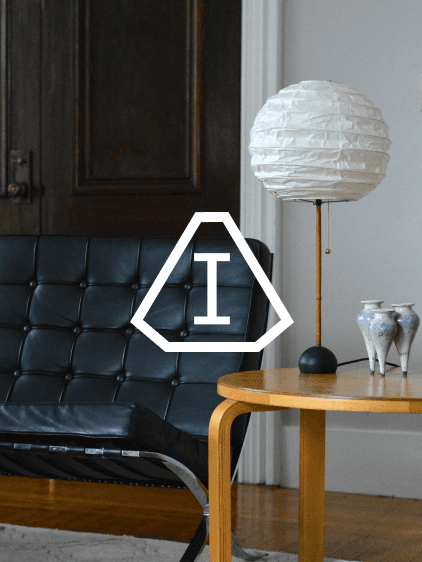
I began collecting historical design objects in 2010. I didn’t take it seriously till 2016. Now, Sundays are for vintage markets. My eye has found objects that have made their way into high end auctions and inside interiors by Studio McGee, Warner Bros., Ace Hotels and AD100 interior designers. Visit interiorartifacts.com
I began collecting historical design objects in 2010. I didn’t take it seriously till 2016. Now, Sundays are for vintage markets. My eye has found objects that have made their way into high end auctions and inside interiors by Studio McGee, Warner Bros., Ace Hotels and AD100 interior designers. Visit interiorartifacts.com
Closing
Notes
Closing notes
1
Design is how I build
Design is how I build
I’m a builder who reaches for design first. I think in product loops, unit economics, network effects, incentives, workflows, and systems as readily as I think in interfaces. Visual craft matters deeply to me; I just don’t lead with it.
I’m a builder who reaches for design first. I think in product loops, unit economics, network effects, incentives, workflows, and systems as readily as I think in interfaces. Visual craft matters deeply to me; I just don’t lead with it.
2
Systems thinker
Systems thinker
The work I’m most proud of usually becomes more than a feature. It turns into a platform, workflow, marketplace, operating model, or repeatable system that helps users, teams, and businesses do more over time.
The work I’m most proud of usually becomes more than a feature. It turns into a platform, workflow, marketplace, operating model, or repeatable system that helps users, teams, and businesses do more over time.
3
Range is a method
Range is a method
I’ve built across music, real estate, social monitoring, commercial real estate, generative AI, and local commerce. I’ve learned to enter new industries by building software for them. Each industry taught me something different: distribution, workflow design, data systems, network effects, creator trust, and incentive design.
I’ve built across music, real estate, social monitoring, commercial real estate, generative AI, and local commerce. I’ve learned to enter new industries by building software for them. Each industry taught me something different: distribution, workflow design, data systems, network effects, creator trust, and incentive design.
4
AI leveraged daily
AI leveraged daily
I use AI throughout the process, but not just to move faster. I observe how it changes the way products are imagined, designed, built, tested, and operated. As creation becomes more fluid and AI noise compounds, authenticity, control, and judgment become more important. I'm actively working to improve the tooling.
I use AI throughout the process, but not just to move faster. I observe how it changes the way products are imagined, designed, built, tested, and operated. As creation becomes more fluid and AI noise compounds, authenticity, control, and judgment become more important. I’m actively working to improve the tooling.
5
Taste earned over time
Taste earned over time
Twenty-five years of design work. Taste is knowing what works, what breaks, what feels clear, what feels trustworthy, and what makes someone want to keep using the thing. Going 0 to 1 requires strong opinions about the system being built and the experience people see, feel, and remember.

© Tim Benzinger
© Tim Benzinger